Marketing a medical practice in 2026 requires a strategic, patient-focused approach that combines digital innovation with community engagement. A well-structured marketing plan ensures your practice reaches the right audience, drives patient acquisition, and fosters long-term loyalty.
With a clear, strategic plan in place, medical practices can not only stand out in a competitive healthcare market but also achieve measurable growth and operational efficiency.
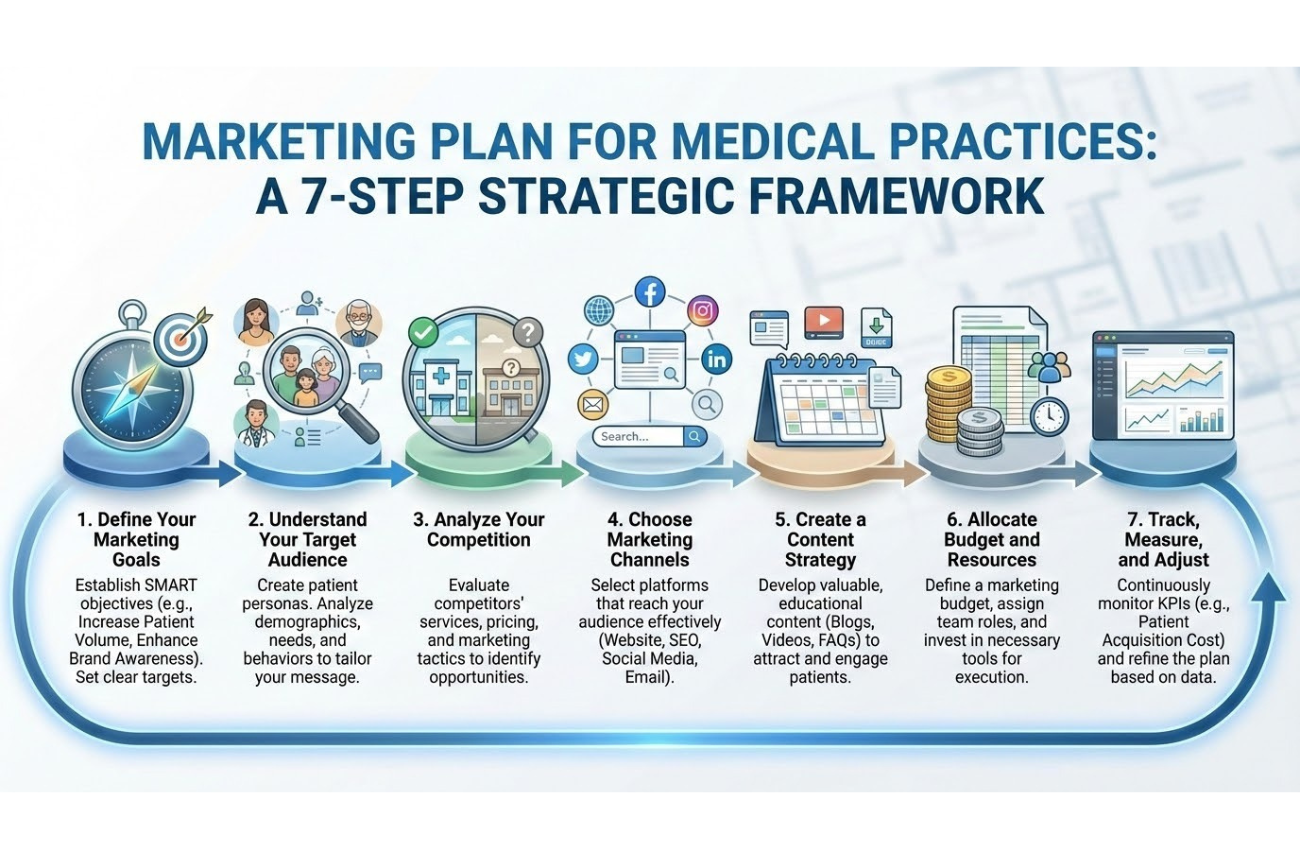
Step 1: Define Your Marketing Goals
Start by identifying the key objectives your practice wants to achieve. Clearly defining your goals gives your marketing efforts focus and direction, ensuring that every campaign aligns with measurable outcomes. Goals help your team prioritize initiatives and allocate resources effectively.
Examples include:
- Increasing new patient appointments by X%
- Improving patient retention and loyalty
- Growing awareness for specialized services or treatments
- Enhancing online reputation and patient reviews
Tip: Use SMART goals (Specific, Measurable, Achievable, Relevant, Time-bound) to create clear targets that can be tracked over time.
Step 2: Understand Your Target Audience
Knowing your ideal patients is critical. Understanding who your patients are and what drives their healthcare decisions allows you to craft marketing strategies that truly resonate. The more insight you have into their demographics, preferences, and needs, the more effectively you can engage them.
Segment your audience by:
- Demographics: Age, gender, location, income level
- Psychographics: Interests, values, healthcare preferences
- Healthcare needs: Specific conditions, treatments, or specialties
By clearly understanding your audience, you can create marketing messages and campaigns that connect with patients, meet their needs, and drive meaningful engagement.
Step 3: Analyze Your Competition
Competitive analysis helps identify gaps and opportunities. By studying what other clinics are doing well and where they fall short, you can uncover opportunities to differentiate your practice. This insight allows you to position your services uniquely and attract the right patients.
Look into:
- Which clinics in your area are attracting similar patients?
- What services or promotions are they highlighting?
- How are they leveraging online reviews and social media?
Use this data to differentiate your practice and emphasize unique value propositions.
Step 4: Choose Marketing Channels
Selecting the right channels ensures your message reaches your audience effectively. Understanding where your patients spend their time and how they prefer to receive information helps you focus on the most impactful channels. Choosing the right mix of online and offline channels maximizes engagement and return on marketing efforts.
Consider:
- Website & SEO: Ensure your site is mobile-friendly, fast-loading, and optimized for local search. Include keyword-rich service pages and meta data. Use sites such as Ahrefs or SEMRush to see what keywords your site is currently ranking for and create articles to capture new keywords.
- Social Media Marketing: Engage patients on platforms like Instagram, TikTok, and LinkedIn with educational content and practice updates.
- Email Marketing: Share newsletters, promotions, and health tips to stay top-of-mind with patients. Holiday coming up? Use it to your advantage and create engaging offers tied to the event.
- Paid Advertising: Use Google Ads or social media ads to target patients actively seeking your services. If using paid advertising, be sure to target locally if you only service your area.
By carefully selecting and optimizing the right marketing channels, your practice can reach more patients, increase engagement, and maximize the impact of every campaign.
Step 5: Create a Content Strategy
Content is central to attracting and educating patients. High-quality, relevant content positions your practice as an authority and builds trust with prospective and current patients. Thoughtful content also improves your search engine visibility, driving more traffic to your website.
Create content such as:
- Blog posts on treatments, wellness tips, or patient success stories
- Video tutorials, procedure explanations, or behind-the-scenes content
- FAQs and resources addressing common patient concerns
Ensure content is AI-optimized and uses relevant keywords for search engines. Structured, high-quality content improves organic search visibility and builds trust.
Step 6: Allocate Budget and Resources
Determine how much you’ll invest in marketing and which tools or platforms will maximize ROI. A clear budget ensures your practice can focus on high-impact initiatives without overspending. Allocating resources strategically allows you to balance paid advertising, content creation, and technology tools for maximum effectiveness.
Choose how much to invest in:
- Paid ads, content creation, and SEO services
- Social media management tools and email automation
- Analytics software to track performance and conversions
By thoughtfully allocating your budget and resources, your practice can maximize the impact of marketing initiatives while maintaining financial efficiency and focus.
Step 7: Track, Measure, and Adjust
Marketing plans aren’t static. Consistently monitoring key metrics allows you to see what’s working, identify gaps, and make data-driven adjustments to your campaigns. Tracking performance ensures your strategy evolves with patient behavior and emerging trends in healthcare marketing.
Track performance using metrics such as:
- New patient acquisition
- Website traffic and conversion rates
- Social media engagement
- Email open and click-through rates
Use insights to optimize campaigns, shift resources, and refine messaging. Regular analysis ensures your marketing plan adapts to trends in 2026 healthcare marketing.
Turning Strategy Into Sustainable Growth
A successful marketing plan for a medical practice in 2026 is built on clarity, consistency, and connection. By defining measurable goals, understanding your ideal patients, selecting the right marketing channels, and continuously tracking performance, practices can move beyond short-term campaigns and build long-term patient relationships.
As healthcare marketing becomes more competitive and data-driven, having the right systems in place is just as important as having the right strategy. OptiMantra helps turn your marketing plan into action by connecting patient engagement, communications, and operational workflows within one integrated platform. Rather than managing disconnected tools, practices can align marketing efforts directly with daily operations and patient care.
With OptiMantra, medical practices can:
- Centralize patient demographics and engagement data to better understand and target ideal patients
- Track patient interactions, appointment trends, and engagement patterns that inform smarter marketing decisions
- Streamline patient communications, including reminders, follow-ups, and outreach tied to marketing campaigns
- Support retention efforts with automated touchpoints that encourage repeat visits and long-term loyalty
- Measure the impact of marketing initiatives through real-world patient activity and outcomes
By bridging the gap between marketing strategy and operational execution, OptiMantra enables practices to attract new patients, strengthen relationships, and continuously refine their approach.
Want to start building your marketing plan and watch your medical practice grow? Try OptiMantra with a free trial or schedule a live demo today!